
The Investment Loan Strategy Smart Property Investors Use
The Investment Loan Strategy Smart Property Investors Use
(And the Structuring Mistake That Quietly Costs Others Thousands)

Two investors can buy an almost identical property, in the same suburb, in the same week, and still end up in very different financial positions five years later. The difference is rarely the property itself. More often, it comes down to the loan behind it.
Most investors spend hours researching suburbs, growth forecasts, and tenant demand. Far fewer spend the same energy on how their loan is structured. Yet the structure you choose can shape your cash flow, your flexibility, and how prepared you are for your next purchase.
In 2026, with lending policies, interest rates, and property markets continuing to shift, understanding your finance options isn’t optional. It’s part of investing well. That’s the kind of finance strategy work the team at Ignite Financial Solutions helps Adelaide property investors work through every day.
A Quick Illustration: Same Property, Different Structure
Consider two hypothetical investors who each purchase a $500,000 investment property in the same month. One chooses a loan structure without reviewing how it fits their broader plan. The other takes time to compare interest-only and principal and interest options and links an offset account to their loan.
Five years on, their properties may have grown in value by a similar amount, but their cash flow position, their equity position, and their readiness to purchase a second property could look very different. This is a simplified illustration only. Outcomes vary based on individual circumstances, lending criteria, and market movements, and no result is guaranteed.
The lesson many experienced investors take from scenarios like this: the loan structure can matter just as much as the property choice itself.
Why Mortgage Structure Matters
An investment property loan is not simply a way to fund a purchase. Depending on your circumstances and objectives, the way a loan is structured may affect:
•Cash flow: how much you repay each month, and when
•Flexibility: whether you can redraw, offset, or split your loan
•Borrowing capacity: how much you may be able to access for future purchases
•Administration: how simply you can separate investment expenses for tax and record-keeping purposes
An unsuitable structure may create extra complexity or limit future options. This is why many investors review their finance strategy before purchasing a property, rather than after settlement.
Understanding Interest-Only Loans
One option available to some investors is an interest-only loan. With this structure, repayments cover only the interest charged for a set period, and the loan balance generally remains unchanged during that time.
Lower repayments may improve short-term cash flow compared with principal and interest repayments.
However, because the principal is not reduced during the interest-only period, these loans may cost more over the life of the loan, and repayments may increase when the interest-only period ends and principal and interest repayments commence.
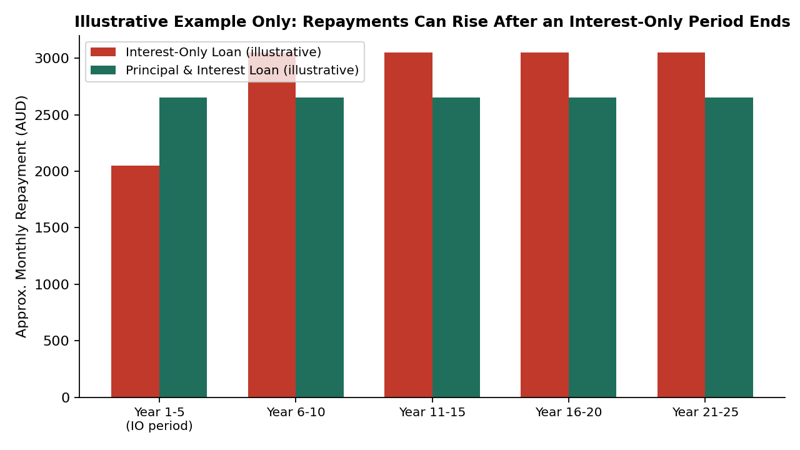
Interest-only loans are not suitable for every borrower. Eligibility, affordability, and suitability should be assessed based on individual circumstances, lending requirements, and financial objectives.
Principal and Interest Loans
Another common option is principal and interest repayments. With this structure, each repayment contributes to both the interest charged and the reduction of the loan balance.
Over time, this may help build equity through loan reduction, although your overall equity also depends on property values, which can rise or fall. Some borrowers prefer principal and interest repayments because they steadily reduce the outstanding loan balance. Whether this approach is appropriate depends on your individual circumstances and objectives.
Using an Offset Account
An offset account is a transaction account linked to a home loan. The balance held in an offset account generally reduces the amount of the loan used to calculate interest. Offset accounts are often linked to variable-rate home loans, but features vary by lender.
For example, if an investor has a $500,000 loan and $50,000 in an offset account, interest is generally calculated on $450,000.
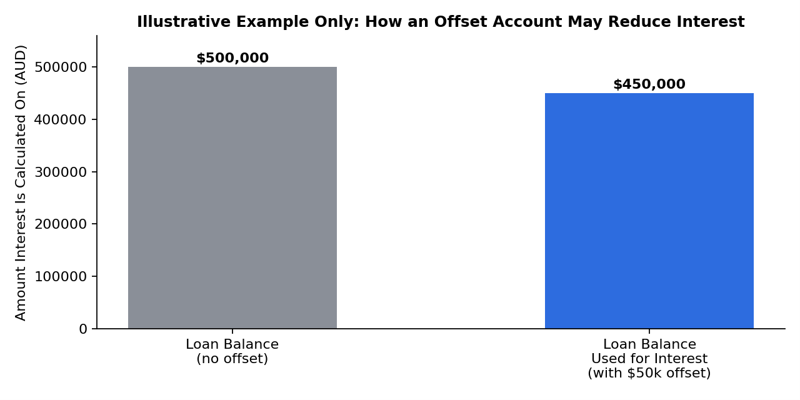
Many investors use offset accounts to improve flexibility while keeping access to their funds. Different lenders offer different features and fees, so it is important to understand how an offset account works before selecting a loan.
Equity as Part of an Investment Strategy
Property equity may increase over time through a combination of loan reduction and changes in property value, although property values can rise or fall. Some borrowers explore whether accessible equity may assist with future property purchases, subject to lender approval and serviceability requirements.
However, equity is not automatically accessible. Before approving additional borrowing, lenders will typically evaluate:
Current property market values
Regular income and financial stability
Existing debts and credit commitments
Ongoing living expenses
Loan-to-Value Ratios (LVR)
Overall borrowing serviceability
Accessing equity also increases your overall debt level and should be considered carefully. Understanding your financial position and obtaining appropriate professional advice may help determine whether accessing equity aligns with your circumstances and objectives.
Managing Cash Flow Effectively
Cash flow is one of the most important, and most overlooked, considerations for property investors. When building an investment budget, your finance structure needs to comfortably account for ongoing holding costs, including:
Mortgage repayments
Council rates and body corporate fees
Land and building insurance
Ongoing maintenance and emergency repairs
Property management fees
Potential vacancy periods (untenanted weeks)
A finance structure that aligns with your income and expenses may help make these costs easier to manage. Investors may have different priorities, including cash flow management, debt reduction, or portfolio growth. The most appropriate approach depends on individual circumstances, objectives, and risk profile. Regular reviews can help ensure your loan structure continues to support your investment strategy as circumstances change.
Planning for Future Growth
Many investors do not stop at one property. For those considering future purchases, it can be helpful to think ahead when structuring finance. Factors such as borrowing capacity, existing debts, loan features, and cash flow can all affect future opportunities.
A loan structure that works well today may not be the best fit several years from now. Reviewing your position regularly may help identify opportunities or potential challenges before they arise.
Avoiding a Common Investment Finance Mistake
Many investors focus solely on securing the lowest interest rate. While interest rates are important, they are only one part of the equation. Loan features, flexibility, fees, future borrowing plans, and cash flow requirements can all influence the suitability of a loan.
Another common mistake is failing to review an investment loan after settlement. Markets change. Lender policies change. Personal circumstances change. Regular reviews may help identify whether your loan structure and features continue to meet your needs as circumstances, lender policies, and market conditions evolve.
Key Takeaways
✓ Loan structure may influence your cash flow, flexibility, and borrowing capacity just as much as your property choice.
✓ Interest-only and principal and interest loans each have different trade-offs, and suitability depends on your circumstances.
✓ An offset account may help reduce interest while keeping funds accessible.
✓ Equity is not automatically accessible and increases your overall debt when used.
✓ Regular reviews help ensure your finance structure keeps pace with your goals.
Building a Strong Investment Finance Strategy
Property investment is about more than purchasing an asset. It is also about creating a finance structure that supports your objectives over the long term. Understanding different loan structures and features may help you make informed borrowing decisions and evaluate future opportunities.
Whether your goal is improving cash flow, building equity, or expanding your portfolio, the right finance strategy can play an important role.
What a Loan Structure Review With Us May Cover
✓ A review of your current or proposed loan structure against your goals
✓ A comparison of interest-only vs. principal and interest options for your situation
✓ An assessment of whether an offset account or loan split could suit your circumstances
✓ A borrowing capacity and cash flow discussion for future purchases
About Ignite Financial Solutions
Ignite Financial Solutions is an Adelaide-based mortgage broking team that helps everyday property investors compare loan structures, understand their borrowing capacity, and plan their finance around their long-term goals. Whether you are buying your first investment property or reviewing a growing portfolio, Ignite Financial Solutions works with a range of lenders to help you find options that may suit your circumstances.
If you are considering an investment property or reviewing your current investment loans, Ignite Financial Solutions can help you compare options that may suit your needs and goals.
Call Ignite Financial Solutions at 0455 438 028 or email [email protected] to discuss your borrowing capacity, loan structure, and finance options.